Opening 1st October 2026. Advanced appointments now being taken.
The Physiology of fear - Anxiety
Understanding anxiety, the physiology of fear, and the path back to steadiness
Anxiety doesn’t always announce itself. Sometimes it begins with a thought that tightens until the body believes it. Sometimes it starts in the body — a quickened pulse, a shift in the chest, a sense that something is off before you can explain why. However it arrives, the effect is the same: the system moves into readiness. Breath shortens. Attention narrows. The body prepares for something it can’t quite name.
Anxiety isn’t a flaw or a weakness. It’s a protective response — the nervous system signalling that something feels significant. Not necessarily dangerous, but meaningful. The body remembers what it had to survive, and it reacts to anything that resembles those old conditions. Sometimes the reaction fits the moment. Sometimes it belongs to a different chapter of your life entirely.
This is why anxiety can feel sudden or disproportionate. The system isn’t responding to the situation itself — it’s responding to the meaning your history has attached to it. A tone of voice, a shift in atmosphere, a familiar dynamic can activate old patterns before you’ve had time to think. Jung described this as a complex rising from the unconscious — an emotional imprint colouring the present with the past (The Structure and Dynamics of the Psyche, 1960). And as Bessel van der Kolk writes in The Body Keeps the Score (2014), the body often holds on to patterns long after the original danger has passed.
For many men, this becomes a way of living. Hypervigilance settles in quietly — not as panic, but as a constant readiness. You stay aware of what’s happening around you. You anticipate problems before they appear. You hold tension without noticing you’re doing it. It feels like personality, but it’s the body trying to stay one step ahead of what it once had to endure.
These patterns aren’t dramatic. They’re subtle, steady, and draining. Rest feels unfamiliar. Stillness feels unsafe. The body stays braced even when nothing is happening. This isn’t because you’re broken — it’s because your system learned that vigilance was necessary, and it hasn’t yet been shown that the world has changed.
When the nervous system senses threat, it falls back on the strategies that once kept you safe. Fight, flight, freeze, fawn — not choices, but instinctive responses shaped long before adulthood. They worked once. They helped you survive. The difficulty comes when the body keeps using an old strategy in situations that no longer require it.
Triggers are part of this. A trigger isn’t the event — it’s the meaning your system attaches to it. The body reacts first, and the mind tries to make sense of it afterwards. Gabor Maté describes this in In the Realm of Hungry Ghosts (2010) as the imprint of past experience shaping how we interpret the present. Intuition, by contrast, is quieter. It doesn’t rush or pressure. It offers direction without urgency. Anxiety often feels loud; intuition rarely does. But when the system has lived in long-term stress, the signals can become tangled, and it takes time to learn the difference.
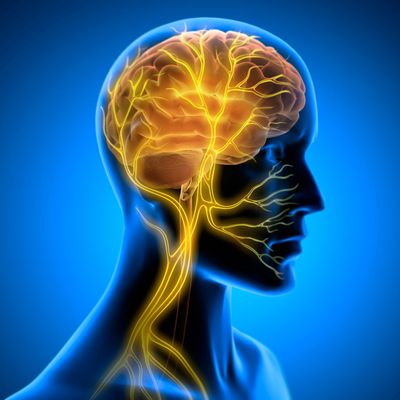
Returning the body to steadiness isn’t about forcing calm. It’s about giving the nervous system signals of safety. Slow, steady breathing is one of the most direct ways to do this — not as a technique, but as physiology. Stephen Porges’ Polyvagal Theory (2011) shows how a longer exhale activates the vagus nerve and signals to the body that the threat has passed. For a system conditioned to stay alert, this can feel unfamiliar at first. But over time, the body learns a new baseline — one where safety doesn’t depend on tension.
To understand anxiety fully, you often have to look beneath it — not at the surface reaction, but at the experiences that shaped the system long before adulthood. Trauma isn’t always dramatic. Sometimes it’s the slow accumulation of moments where you had to stay alert, manage other people’s emotions, avoid conflict, or carry responsibility too early. The body stores what it couldn’t resolve, and those unresolved patterns become automatic. Peter Levine describes trauma in Waking the Tiger (1997) as energy mobilised for protection that never completed its cycle — a survival response that stayed stuck in the system.
Healing isn’t about revisiting every memory. It’s about helping the nervous system update its understanding of safety. It’s about recognising when the body is responding to an old pattern rather than the moment in front of you. As the system begins to trust that the present is different from the past, the reactions lose their urgency. The body stops bracing for impact. You stop living as the man you had to be, and start living as the man you are now.
Therapy supports this shift. Not by eliminating anxiety, but by helping you understand your internal landscape with clarity. It gives you a space where you don’t have to stay on alert, where the system can settle enough for you to see what’s happening inside without being overwhelmed by it. The work is practical and grounded — understanding your responses, the meaning you attach to situations, and the patterns that operate beneath awareness. Bringing these patterns into awareness doesn’t remove them, but it changes your relationship to them.
As the system settles, anxiety becomes less of a constant state and more of a signal you can interpret with steadiness. The goal isn’t to become someone who never feels anxious. The goal is to become someone who understands their own system well enough that anxiety no longer dictates their life. When the body learns it no longer has to stay braced, something shifts. You move from surviving to living. From reacting to choosing. From carrying everything alone to finally having space to breathe.